





"HR Plus has been a strong and reliable payroll administration partner. Their team is highly skilled, attentive, and consistently responsive to client needs. They demonstrate a strong commitment to service excellence and are always willing to do what is needed to meet client expectations and support successful payroll operations."
Payroll Without the Headache.
HRplus Payroll Outsourcing handles your entire payroll operation — accurately, compliantly, and on time — so you can focus on growing your business.

Trusted By Leading Organizations Across the Caribbean

Why choose HRplus Payroll Services .
of SMBs make payroll errors annually
hrs/week lost to payroll admin per employee
ISO Certified 27001, 27017 & 27018 GDPR compliant and more...
Payroll Accuracy Trusted to Deliver
Workers are paid with HRplus
years of payroll expertise
WHAT WE HANDLE FOR YOU
End-to-End Payroll Outsourcing Solutions
Full Payroll Processing
Calculation, deductions, net pay, and statutory compliance — every cycle.
Explore payroll serviceTax Filing & Compliance
NIS, PAYE, health surcharge, and all statutory obligations handled.
Explore payroll serviceReporting & Analytics
Custom reports, executive dashboards, real-time payroll insight.
Explore payroll serviceEmployee Self-Service
Payslips, tax forms, leave balances — anytime, any device.
Explore payroll serviceMulti-Currency & Country
Processing across Caribbean territories and international locations.
Explore payroll serviceOUR PROCESS
Up and Running in 4 Simple Steps
Discovery Call
We learn your payroll structure, headcount, and pain points.
Data Migration
We securely transition your payroll data and configure the system.
Parallel Run
We run payroll alongside your current process to validate accuracy.
Go Live
We take over fully; your team is freed from payroll forever.
THE HRPLUS PAYROLL OUTSOURCING ADVANTAGE
The HRplus Payroll Advantage
Caribbean Expertise
Deep knowledge of local legislation and statutory bodies across Trinidad & Tobago, Barbados, Jamaica, Guyana, and the wider Caribbean.
Technology-Powered
Built on HRplus Software's enterprise-grade HRIS platform — not spreadsheets.
Dedicated Specialists
Your own named payroll team — not a call center.
"We don't just process payroll. We become your payroll department."
CLIENT STORIES
What Our Clients Are Saying
"Compliance was our biggest worry. The HRplus team knows every statutory nuance — we haven't had a single filing issue since."
"Yessyka's team is very well versed on payroll administration, as well as benefits and deductions management and processing for several countries in the English & Spanish Caribbean region. Their knowledge, expertise, client-oriented approach, speed of answer and great attention to details helped to successfully deploy their payroll solution on time, scope, and budget."
Join 500+ organizations that trust HRplus for payroll
WHO WE SERVE
Payroll Outsourcing for Every Sector
Find Out How Much You Could Save
Most clients save 30–50% vs. managing payroll in-house. Get a custom savings estimate in 24 hours.
INSIGHTS
Payroll Knowledge for Caribbean Based Businesses


FAQS
Payroll questions, answered
Select a section to reveal its questions, then choose a question to read the answer.
Payroll across the Caribbean can be complex. Every country and territory has its own tax rules, statutory deductions, employment legislation and reporting deadlines. Below are answers to some of the questions employers most frequently ask.
No. Each Caribbean jurisdiction has its own payroll legislation, tax system, national insurance requirements, minimum wages, leave entitlements and filing deadlines. A payroll process that is compliant in one country may not meet the requirements of another.
Depending on the country, deductions may include income tax or PAYE, National Insurance or Social Security, health contributions, education levies, pension contributions and other statutory charges. The applicable rates, earnings limits and calculation methods vary by jurisdiction.
Usually, yes. Employers may need to register with the relevant tax authority, National Insurance or Social Security agency and, in some territories, other statutory bodies. Registration should normally be completed before employees are paid and deductions are remitted.
Employees may be paid weekly, fortnightly, semi-monthly or monthly, depending on local legislation, employment contracts and company policy. The payroll schedule must allow enough time for calculations, approvals, payments and statutory submissions.
Contributions are generally based on insurable earnings and may include both an employee and an employer portion. Rates, contribution ceilings, age limits and covered earnings differ across the Caribbean and may change following legislative or budget updates.
They may be. Bonuses, commissions, housing, vehicles, travel allowances and other benefits can be fully taxable, partially taxable or exempt, depending on the territory and the nature of the payment. Each item should be reviewed before it is added to payroll.
Overtime and public-holiday pay are governed by local labour legislation, wage orders, collective agreements and employment contracts. The applicable rate may depend on the employee's role, industry, hours worked and the day on which the work was performed.
Leave entitlements vary significantly across the region. Employers must consider eligibility, length of service, statutory minimums, payment requirements, National Insurance benefits and company policies when calculating leave-related payments.
An employee normally works under the direction and control of the employer and may be entitled to statutory benefits and payroll deductions. A contractor generally operates independently. Incorrect classification can create unpaid tax, National Insurance, employee-benefit and legal liabilities.
Final payroll may include outstanding salary, accrued vacation, commissions, notice pay, severance or redundancy payments and other contractual amounts. The calculation and tax treatment depend on local employment and tax legislation.
Employers should maintain payroll registers, payslips, employee earnings records, deduction details, leave balances, payment confirmations, statutory returns and supporting approvals. Record-retention periods and required report formats vary by country.
Late or incorrect submissions may result in penalties, interest, audits and employee benefit issues. Employers may also need to file amended returns and reconcile historical balances with the relevant authorities.
Yes, but each country must still be processed according to its own rules. A regional payroll model can provide consistent controls, reporting and approval processes while applying country-specific calculations, deadlines and statutory requirements.
Payroll contains sensitive personal and financial information. Employers and payroll providers should use secure systems, restricted access, approval controls, audit trails, encrypted data transfers and documented data-retention procedures that comply with applicable privacy legislation.
Payroll outsourcing gives employers access to country-specific expertise, structured controls and consistent processing. It can reduce the pressure on internal teams, improve accuracy and timeliness, strengthen data protection and help identify compliance gaps before they become costly problems.
The employer typically remains legally responsible for its payroll obligations. However, an experienced payroll partner can calculate deductions, prepare reports, monitor deadlines, maintain supporting records and help the employer meet those responsibilities.
Yes. A payroll compliance review can identify incorrect rates, missing deductions, inconsistent statutory reports, employee-classification issues and weaknesses in approval or recordkeeping processes. The findings can then be used to correct historical issues and strengthen future payroll cycles.
The onboarding process usually requires employee data, salary and benefit details, tax and National Insurance registration information, year-to-date payroll balances, leave records, banking instructions and current payroll reports. The exact requirements depend on the countries and services included.
Pricing generally depends on the number of employees, countries, payroll frequencies, statutory filings, reporting requirements and overall complexity of the payroll. A regional assessment helps determine the appropriate service and pricing structure.
Managing payroll across the Caribbean should not require coordinating a different process, system and provider in every territory. HRplus combines regional payroll expertise, secure technology and consistent controls to help organisations pay employees accurately, on time and in line with local requirements.
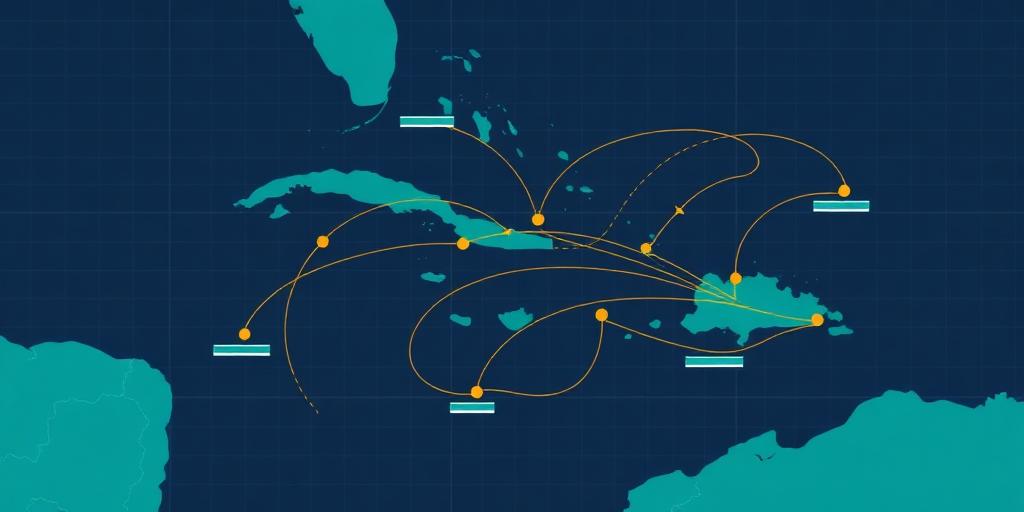
HRplus payroll outsourcing currently supports 23 Caribbean and Central American countries and territories: Anguilla, Antigua and Barbuda, The Bahamas, Barbados, Belize, Bermuda, the British Virgin Islands, the Cayman Islands, Dominica, the Dominican Republic, Grenada, Guyana, Haiti, Honduras, Jamaica, Montserrat, St. Kitts and Nevis, St. Lucia, St. Maarten, St. Vincent and the Grenadines, Suriname, Trinidad and Tobago, and the Turks and Caicos Islands.
If your organisation operates in another territory, contact us to discuss your requirements and confirm availability.
The service can include payroll setup, processing of earnings and deductions, statutory calculations, payroll reports, payslips, bank or ACH files, general-ledger files and year-end documents. Statutory reports are included as standard, while treasury services, leave management, HR functions, and time and attendance can be added based on your needs.
The exact responsibilities, reports, deadlines and payment services are documented during onboarding so both teams know what is required for every payroll cycle.
With HRplus payroll software, your team uses the system and remains responsible for entering data, processing payroll, performing checks and producing reports. With payroll outsourcing, your team provides and approves the required information, while HRplus performs the agreed payroll-processing activities and prepares the required outputs.
Both options use HRplus technology. The difference is who performs the day-to-day payroll work.
Payroll outsourcing supports an employer that already has its own legal entity and employees. The client remains the legal employer, while the payroll provider performs agreed payroll calculations, reporting and related administration.
Under an Employer of Record arrangement, the EOR becomes the legal employer for workers in a country where the client may not have an employing entity. A Professional Employer Organisation generally shares selected employment responsibilities with the client under a co-employment model. These services are not interchangeable, so the right option depends on your legal structure and the countries in which you operate.
Yes. HRplus supports multi-company, multi-territory and multi-currency payroll, allowing regional employers to use one coordinated service while preserving the statutory calculations, reports, currencies and deadlines required in each jurisdiction. This gives management a more consistent process and consolidated visibility without treating Caribbean payroll as though every country follows the same rules.
Yes. HRplus can exchange payroll information through agreed import and export files, including Excel and CSV payroll inputs, bank files and general-ledger outputs. HRplus Payroll also integrates directly with HRplus HR, Leave, Benefits and Time and Attendance modules.
During discovery, we review your current systems, data formats and reporting needs to determine the most practical integration or file-exchange approach. Any custom API or third-party integration requirements must be assessed before implementation.
The timeframe depends on the number of employees, pay groups, companies and territories, as well as the condition of the existing payroll data and the complexity of earnings, deductions, benefits and reports. A single straightforward payroll can be implemented more quickly than a multi-country payroll with complex rules or incomplete records.
After discovery, HRplus provides a proposal-specific implementation plan covering data collection, configuration, validation, parallel testing, approvals and the target go-live date. Payroll cut-offs and service levels are also agreed for each engagement rather than published as standard terms.
Yes. Historical records and year-to-date balances can be imported or entered as part of implementation, subject to the quality and format of the source data. These balances are validated carefully because they affect tax, National Insurance or Social Security, employee records and year-end reporting.
We will identify the files and reconciliation reports required before migration begins.
The client retains final approval authority. HRplus prepares the payroll and agreed validation reports, but no employee payment or treasury instruction should be released until the client's authorised approver confirms that the payroll is correct.
Approval roles, cut-off times and escalation contacts are agreed during onboarding to create a clear audit trail.
HRplus uses a structured validation process that can include input checks, exception reporting, prior-period comparisons, statutory reconciliations and reviews of unusual variances. The client also receives agreed payroll reports for review and approval before finalisation.
These controls help identify issues such as missing employees, duplicate payments, unexpected net-pay changes, incorrect deductions and inconsistencies between payroll and statutory reports.
HRplus first assesses the cause, employees affected, statutory impact and urgency of the correction. Depending on the circumstances and the client's approval, the adjustment may be processed in the next regular payroll or through an off-cycle payroll.
Where a statutory return or payment is affected, the required correction or amended report is prepared in accordance with the rules of the relevant territory.
Off-cycle and emergency payrolls can be supported for items such as urgent corrections, late hires, terminations, bonuses or special payments. Processing is subject to agreed notice, applicable fees, complete instructions, client approval and banking cut-off times.
Clients should notify HRplus as early as possible because same-day completion may not be available in every situation or territory.
HRplus can prepare bank or ACH files and offers treasury services, including employee payment support where required. For statutory obligations, HRplus provides the required reports and payment instructions; the client makes the payments directly to the relevant authorities. The client remains responsible for providing cleared funds, accurate authorisation and approval before the applicable deadlines.
Yes. HRplus supports multi-currency payroll and can manage payrolls for different companies or territories in their applicable currencies. Payment arrangements depend on the banking facilities, funding method and currency requirements agreed for each payroll. Currency conversion, exchange-rate responsibility and any related fees should be defined before processing begins.
Employees can access their pay history and payslips from their mobile devices, and authorised users can retrieve historical payroll data and reports through the secure client portal. Payslips can also be distributed electronically according to the agreed setup and applicable privacy requirements. Access is controlled so employees see only their own information and authorised client users see only the companies, pay groups and reports assigned to them.
Statutory reports are included as standard. HRplus can also provide payroll registers, deduction and contribution reports, bank or ACH files, general-ledger files, variance reports, cost reports and other agreed management outputs. Report formats and cost-centre or account mappings are confirmed during implementation so payroll results can be reconciled and transferred efficiently to finance.
HRplus monitors updates from the relevant tax, National Insurance or Social Security and labour authorities in the territories it supports. This is supported by internal country research and reviews, client notifications, and information from local partners and professional advisers. Applicable rates, ceilings, thresholds, forms and reporting requirements are assessed and incorporated into the payroll process when they change.
Because Caribbean requirements are jurisdiction-specific, legislative updates are evaluated country by country rather than applied as one regional rule.
HRplus encrypts connections using TLS and encrypts databases and backups at rest using AES-256. The system supports two-factor authentication, strong password policies, automated account lockout, configurable access by company or payroll area, and user activity and payroll audit logs.
Production access is restricted, support access is requested and logged, and development environments are separated from production systems. These measures help protect sensitive employee and financial information throughout the payroll process.
HRplus uses real-time hot failover for critical systems, daily backup snapshots, additional weekly backups and continuous system monitoring. These controls are designed to support service continuity and recovery if a primary system fails or data must be restored.
Payroll calendars, client contacts, approval deadlines and escalation procedures are also agreed so operational issues can be addressed before they affect pay day.
Yes. Each client receives an assigned payroll service team, with named operational contacts, authorised client approvers and an escalation path for urgent or unresolved issues. The communication schedule and service contacts are confirmed during onboarding based on the size and complexity of the payroll.
Support requests can also be tracked through the HRplus help desk.
Your organisation owns its payroll data. During the service, authorised users can access historical payroll data and reports through the secure client portal.
If the service ends, HRplus provides an export of the client's payroll data. The service agreement documents the applicable export format, final reports, retention periods and secure handover or deletion requirements.
Yes. Outsourcing can be valuable when a business does not have enough internal payroll capacity, is entering a new Caribbean territory or needs stronger controls and local statutory knowledge. It also allows growing companies to add employees, pay groups or territories without rebuilding the payroll function each time.
Suitability depends on payroll complexity and service needs, not only employee numbers. HRplus can assess whether outsourcing or payroll software is the more cost-effective option.
Pricing is based on factors such as employee numbers, payroll frequency, number of companies and territories, complexity of earnings and deductions, reporting needs, treasury services and optional HR, Leave or Time and Attendance services.
HRplus reviews the payroll requirements before providing a quotation so the price reflects the work, controls and risk involved, not only the number of employees.
Payroll compliance review and correction can be included depending on the selected service package. The review may cover payroll calculations, statutory deductions, employee and employer contributions, year-to-date balances, reports and process controls to identify inconsistencies or potential compliance gaps.
Where issues are found, we can help develop a correction plan, prepare revised calculations or reports and strengthen the process for future payroll cycles. Historical corrections and submissions remain subject to the requirements and acceptance of the relevant authorities.
View the full Caribbean payroll FAQ library →
Payroll and employment requirements vary by jurisdiction and change over time. This FAQ provides general information and does not replace country-specific legal, tax or professional advice.